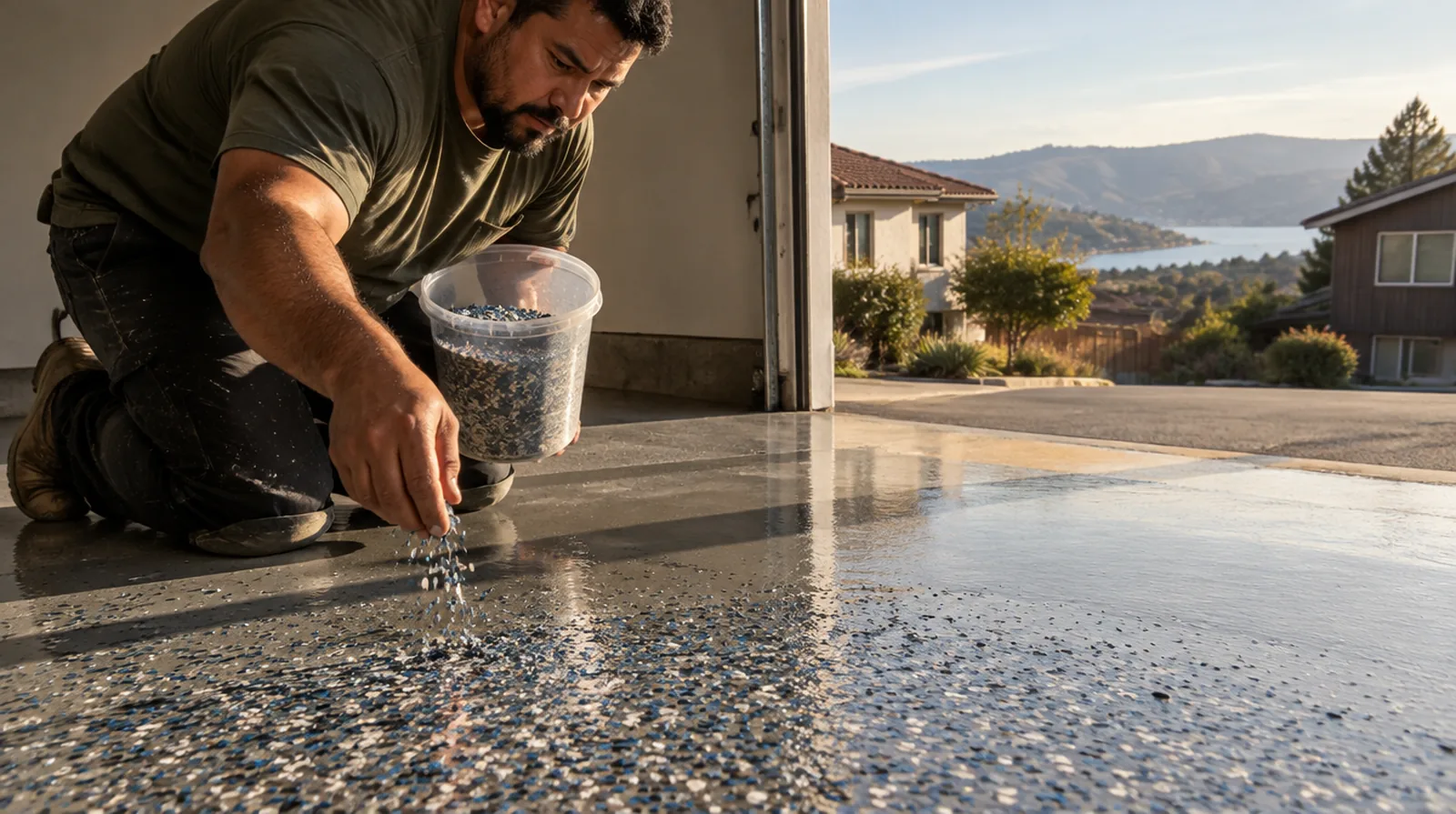
Why flake suits Hayward slabs
After crack repair, a solid-color floor can show filled lines. A full broadcast of colored chips breaks the surface into thousands of small specks, so the eye does not land on repairs, tire marks or dust.
Picking colors
Mid-gray blends with black and white are the most popular. Warmer tan and brown suit older homes. If you want something bolder, there are blends with blue or red accents. We bring large boards to compare.
Steps
Grind, repair, prime, base coat, chips to refusal, cure, scrape, vacuum, clear topcoat.
Texture and safety
The texture helps on rainy winter days when water drips off the car. We can make the surface smoother with additional clear coats.
Other uses
Laundry rooms, back entries, workshops and break rooms.
Is flake durable?
Very. The chips are inside the coating and protected by the topcoat.
Can I clean it with a hose?
Yes, and a squeegee toward the door.
Break rooms and locker rooms
Industrial clients often add flake in break rooms and locker areas, where it handles boots and spilled coffee while looking better than bare concrete.
Flake floors in Hayward garages and break rooms
Flake floors are a strong fit for Hayward garages, especially older slabs with patched cracks. The chips hide repairs, dirt and small chips, and the texture adds grip. In commercial settings, flake is popular for break rooms, locker rooms and restrooms where floors need to look clean and stay slip-resistant.
How we install flake
We grind, repair cracks, apply a base coat, broadcast chips to full coverage, scrape and vacuum the excess, then apply a clear topcoat. Most garages are done in one to two days.
Questions about flake
Will cracks show through? Filled cracks are mostly hidden by flake, but moving cracks may reappear as fine lines.
Is it good for a damp garage? We test moisture and use a moisture-tolerant primer if needed.
What colors work best? Grays and mixed blends hide dirt well.
Cleaning and care
Sweep often and rinse with a hose or mop with a gentle cleaner. In break rooms, an auto scrubber with a neutral cleaner keeps the floor sharp. Avoid harsh solvents that can dull the topcoat, and add a fresh clear coat years down the road if the gloss fades.
Flake floors for garages built into the hills
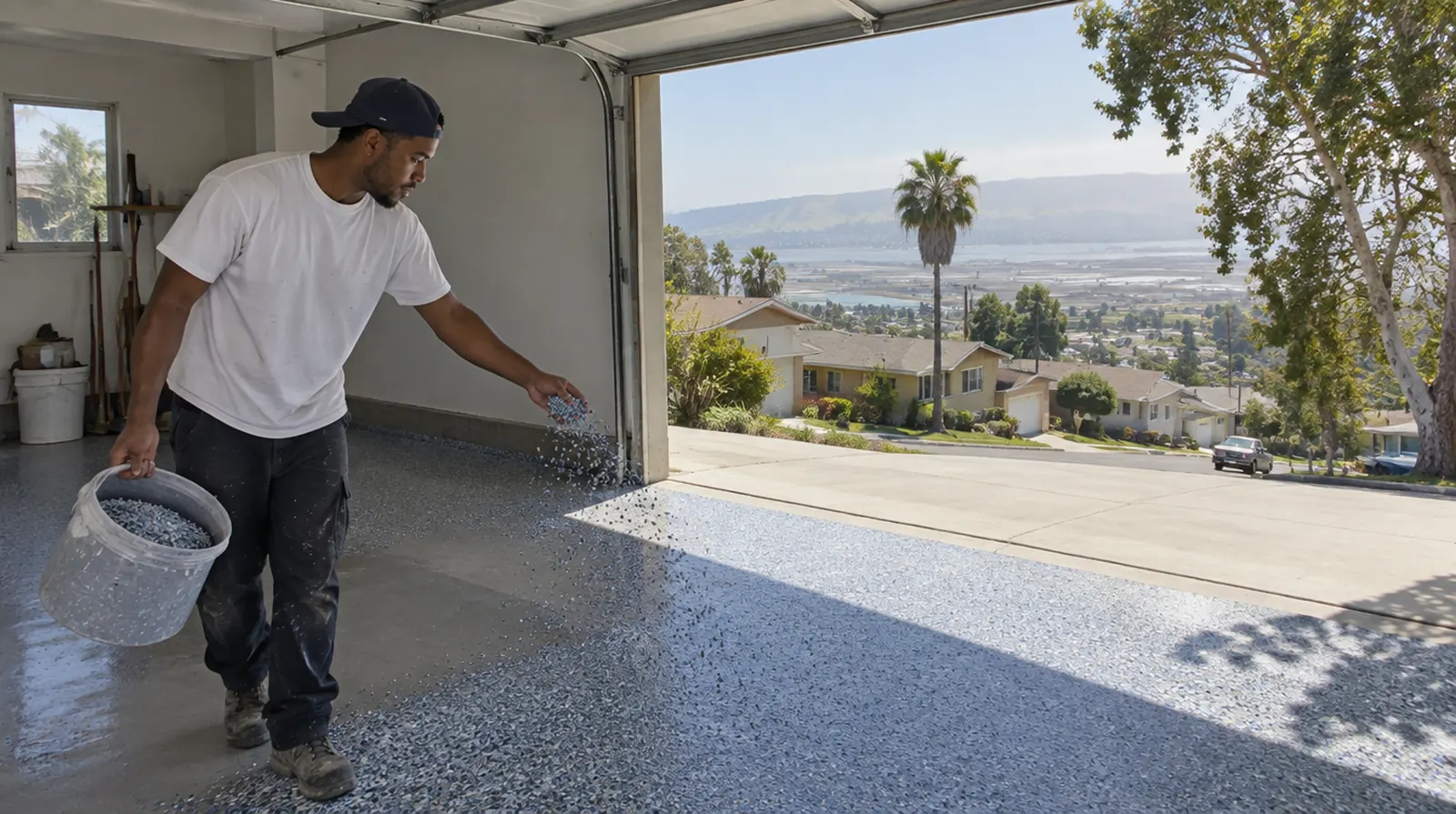
In Hayward Highlands, Fairview and the neighborhoods climbing toward Garin Regional Park, garages are often tucked under the living space with the slab cut into the slope. These rooms get less sun, hold cooler air and tend to show more surface moisture than flatland garages. A full-broadcast flake system works well here because the chips add texture for wet shoes, hide the inevitable dust and grit tracked in from a steep driveway, and give the floor a finished look that matches a home with a view.
The key on these floors is what goes under the flake. We take a moisture reading near the back wall and along the uphill side. If the numbers are high, we lay a moisture-tolerant epoxy primer before the base coat. Then we roll the colored base, broadcast chips by hand until the floor is fully covered, scrape off the loose ones after cure, and lock everything in with a clear topcoat.
Picking chip colors for a hillside home
Blue-gray and slate blends look natural next to the cool light these garages get. Warmer tan and brown mixes suit homes with wood trim or a workshop corner. Smaller chips give a more uniform look; larger chips show more pattern. We bring sample boards so you can see them in your own garage lighting rather than on a screen.
Steep driveways and the door edge
Rain running down a sloped driveway hits the garage door first. We pay attention to the front edge, filling any gaps under the door seal and extending the coating a little past the threshold where it makes sense. A bit more texture in the topcoat near the entry helps with footing when tires bring water inside.
Will the chips feel rough under bare feet? Not after scraping and topcoat. The surface is lightly textured, similar to an orange peel finish.
Pick a chip blend
Call (510) 880-3198.