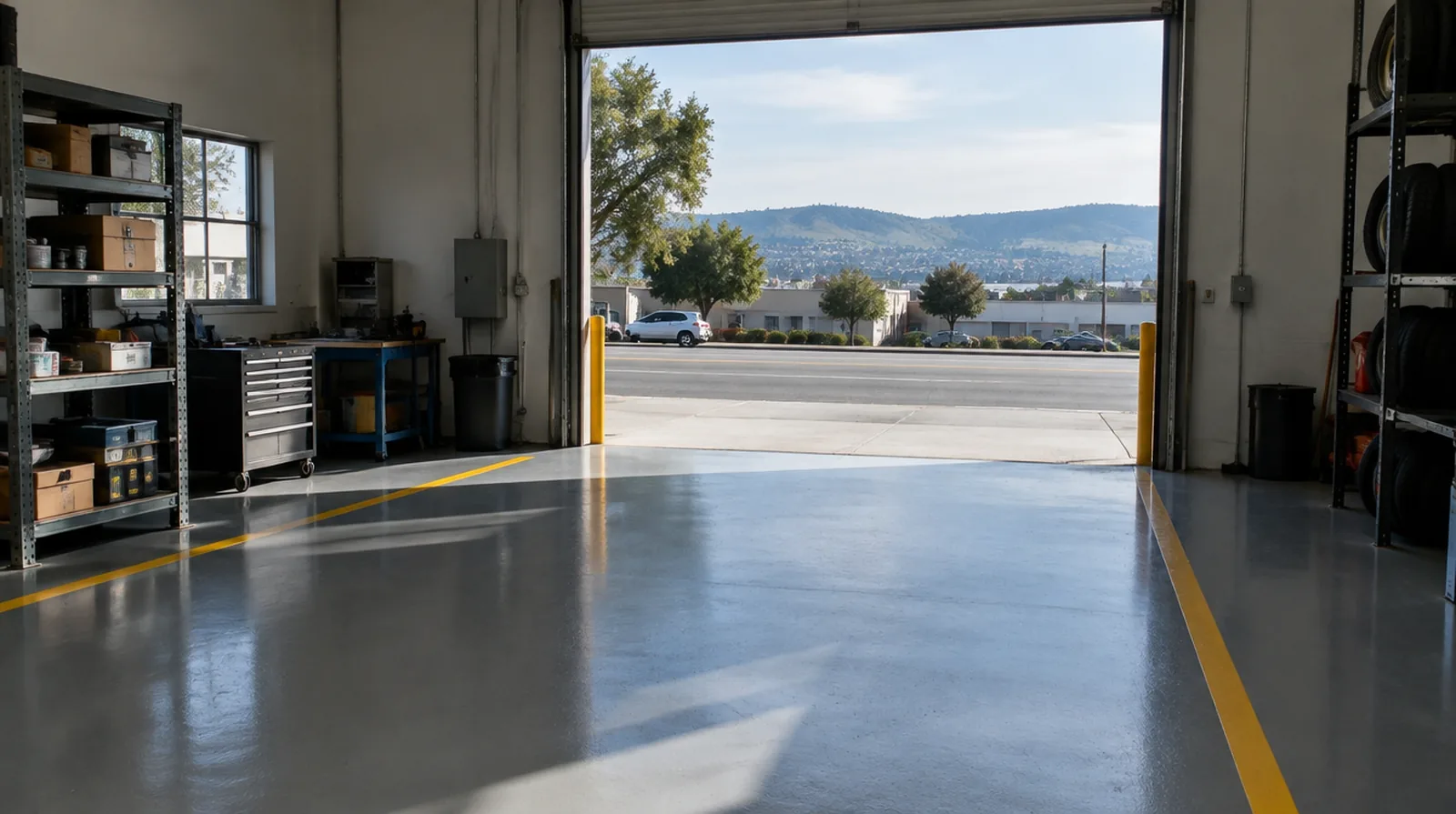
Facilities we serve
- Food and beverage production
- Bakeries and commissary kitchens
- Warehouses and distribution
- Cabinet, metal and fabrication shops
- Auto and fleet service
- Retail and offices
Systems
Food plants get slip-resistant urethane cement or epoxy with cove bases. Warehouses get abrasion-resistant coatings and line striping. Fabrication shops get thick, impact-resistant systems. Offices and showrooms may suit polished concrete.
Joints and movement
Industrial slabs here have many control joints and cracks from ground movement. We fill joints with semi-rigid filler where forklifts cross and treat moving cracks so the coating does not split.
Schedules
Night, weekend and phased work around production, with fast-cure materials where needed.
Can you meet food safety requirements?
We install systems suited to food facilities and provide data sheets.
Do you stripe?
Yes, aisles, walkways and safety zones.
Coolers and freezers
Cold rooms need materials made for low temperatures. We plan these installs carefully, often when the room can be warmed and emptied for a short window.
Bakery and beverage lines
Sugar, syrups and hot wash water break down ordinary epoxy. For those rooms we recommend urethane cement at a quarter inch, which tolerates heat cycling and steam cleaning.
Commercial floors for Hayward's industrial corridor
Hayward has one of the largest industrial areas in the East Bay, with food production, beverage plants, distribution centers, auto and fleet shops, and biotech and lab space. Commercial epoxy flooring in Hayward needs to handle each of those. Food plants need seamless, washable floors that resist hot water and sanitizers. Distribution centers need floors that hold up to forklifts and keep dust down. Labs need chemical resistance and easy cleaning.
Questions we hear from plant and facility managers
Can you work during a production shutdown? Yes, we plan around scheduled shutdowns and can work around the clock to fit a short window.
What about thermal shock? For areas that see hot water washdowns or ovens, we use urethane cement systems designed for temperature swings.
How do you handle trench drains? We slope coatings into drains and seal edges so water cannot get under the floor.
Can you mark forklift lanes? Yes, with durable striping in the topcoat.
Planning the job
We start with a walk-through and moisture testing, then provide a written scope and schedule.
Food, beverage and wash-down floors
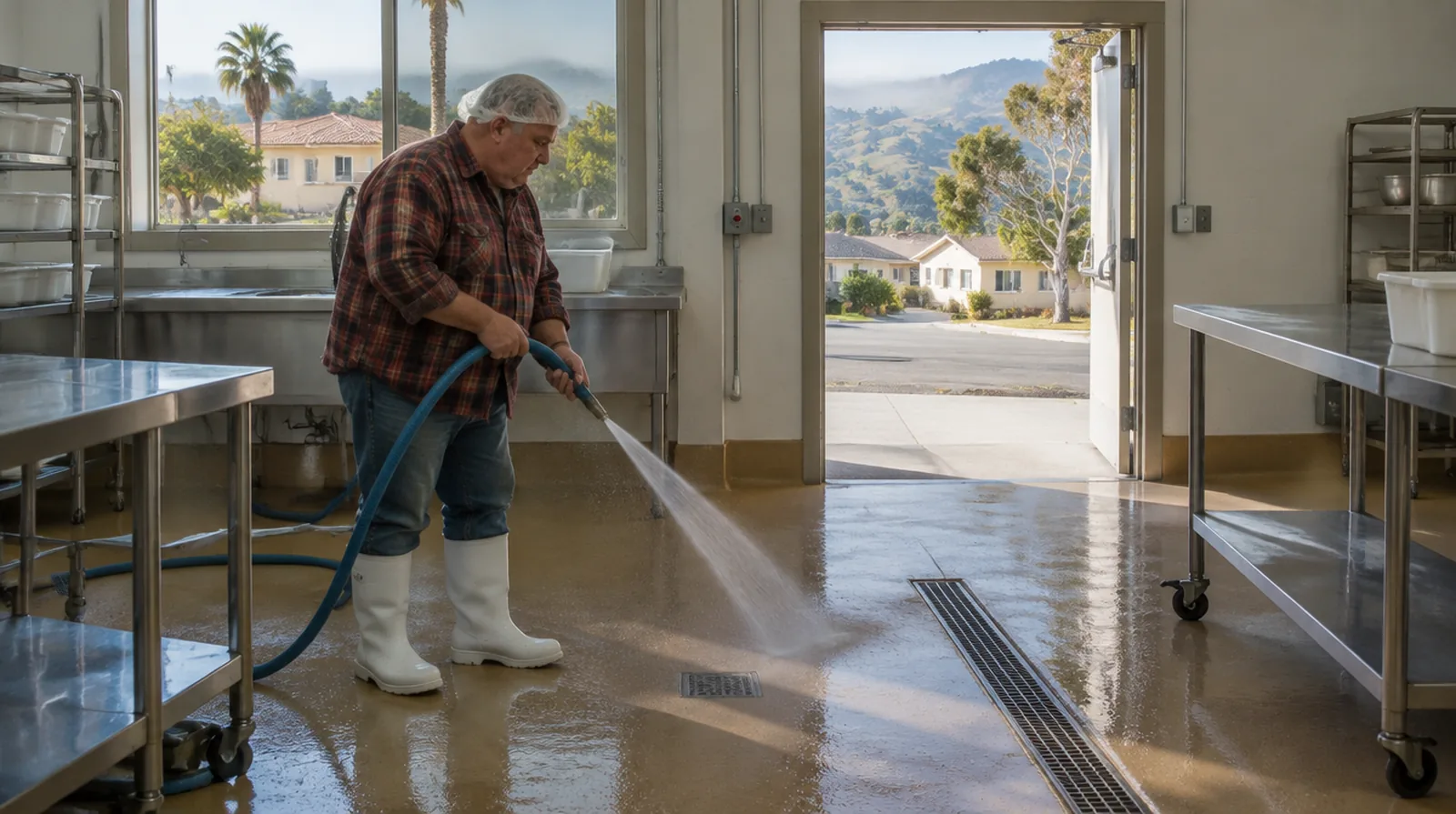
Hayward has long been a place where food is made. The canneries are gone, but the industrial blocks west of 880 still hold bakeries, candy makers, beverage bottlers, commissary kitchens and meal-prep companies. Floors in these buildings get hot water, cleaning chemicals, sugars, fats and constant cart traffic. A thin decorative epoxy will not last there. These rooms usually need a heavier resin system, often a urethane cement, that tolerates thermal shock from hot wash-down and resists the acids found in many foods.
We start with a walk-through of the production area during or after a shift. We note where water pools, where floor drains sit, where pallet jacks turn, and which chemicals your sanitation crew uses. Then we put a scope in writing that covers system thickness, slope corrections, cove base height and drain detailing.
Cove base and drains
Where the floor meets the wall is where bacteria and water hide. An integral cove base, formed from the same resin and carried a few inches up the wall, removes that seam. Around floor drains we cut back to sound concrete and rebuild the slope so water actually reaches the drain instead of sitting in a low spot.
Scheduling around production
Most plants cannot shut down for long. We plan installs over weekends or planned maintenance shutdowns, and we can work one room at a time. Fast-curing resin systems let a production area return to use quickly once they reach their stated cure.
Do you work with inspection requirements? We can provide product data sheets for your food safety files and coordinate with your quality team on materials.
What about dry warehouse space next to production? Storage and shipping areas usually do fine with a thinner, lower-cost epoxy and striped aisles. We often quote the wet production rooms and the dry warehouse as separate systems so you only pay for heavy resin where it is truly needed.
Plan your facility floor
Call (510) 880-3198.