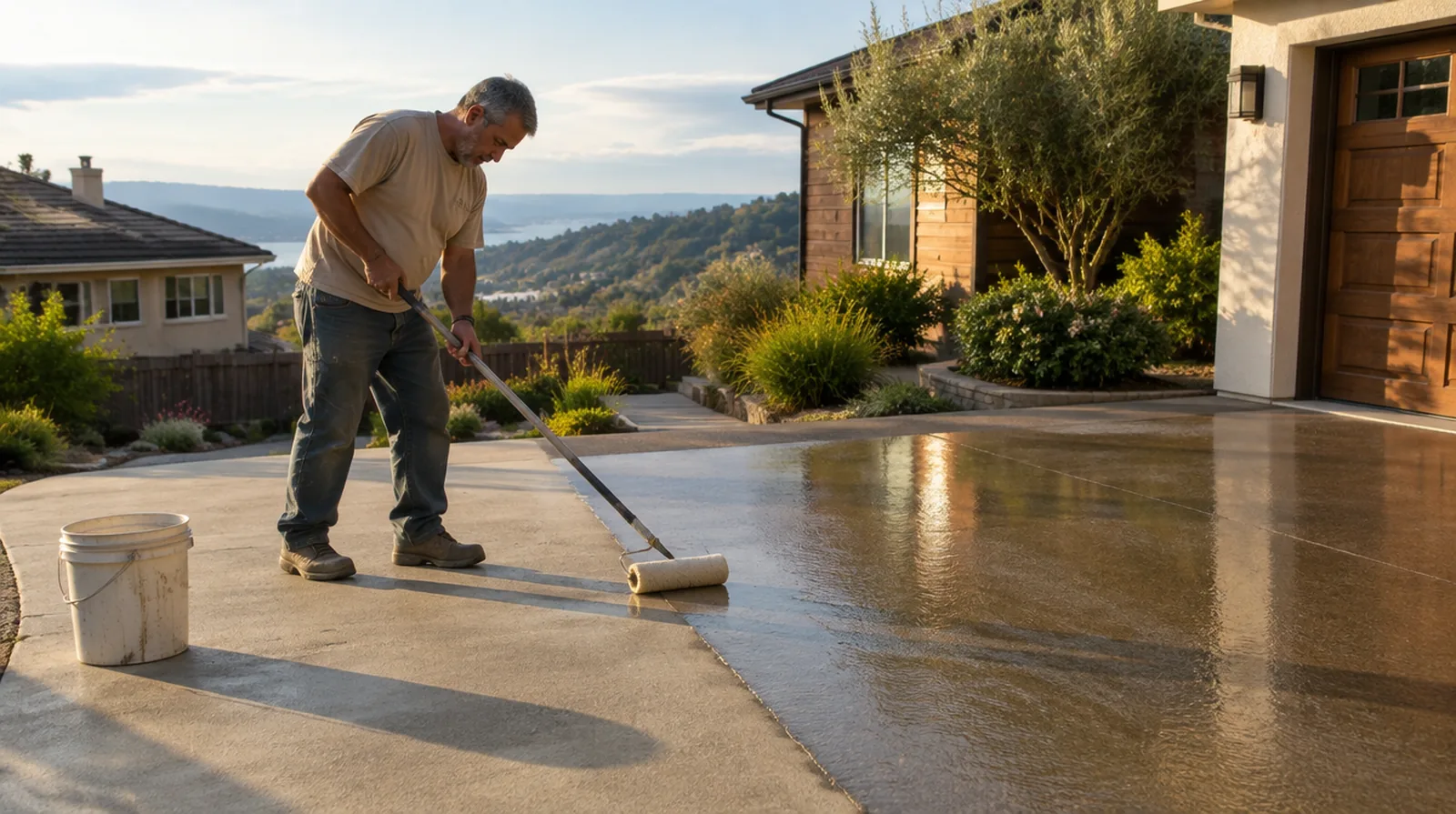
What we seal
Residential driveways, patios and steps, plus commercial loading aprons and walkways.
Why it helps
Rain soaks into bare concrete each winter, and oil from cars and trucks stains it. A sealer slows both.
Process
Clean, degrease, dry and seal. Joints can be filled with flexible sealant first.
How often?
Every few years.
Slippery?
Penetrating sealers keep traction.
Hillside steps and walks
Homes in the Hayward hills often have long runs of concrete steps and sloped walks. Those stay damp in winter and grow moss on the shady side. After cleaning, a breathable sealer slows water absorption so the steps dry faster and stay cleaner.
Truck aprons
Loading aprons outside warehouses get diesel drips and tire scuffs. Sealing keeps fluids on the surface longer so they can be cleaned.
Winter rain and runoff
Hayward's wet season is short but can be heavy. Bare concrete soaks up water, grows algae on shady sides and stains from leaves. A breathable sealer lets moisture out of the slab while keeping surface water from soaking in, which is what you want on slabs that stay damp from below.
Concrete sealing in a wet-winter city
Hayward's winters bring steady rain, and hillside lots send water rushing across driveways and walks. Bare concrete absorbs that water, grows moss in shady spots and picks up stains from leaves, oil and tire marks. Concrete sealing in Hayward helps surfaces shed water, resist stains and stay cleaner through the rainy season.
Questions about sealing
Can you seal truck aprons at a business? Yes, with a tougher sealer suited to heavy loads.
Will sealer stop moss? It slows growth by keeping water out of the surface, though shady areas still need occasional cleaning.
Can you seal hillside steps? Yes, with grit added for traction on steep runs.
How often should I reseal? Every few years for most residential concrete.
Timing
Late spring through early fall gives the concrete time to dry fully before sealing.
Oil and tire marks on flatland driveways
Many driveways in Tennyson and Mt. Eden have soaked up years of drips. We degrease and draw out what we can before sealing, so the sealer protects a cleaner surface. Older stains may lighten rather than vanish, and we will tell you what to expect before we begin.
Best season to seal
Dry late summer and early fall are ideal here.
Loading aprons, dock areas and parking pads
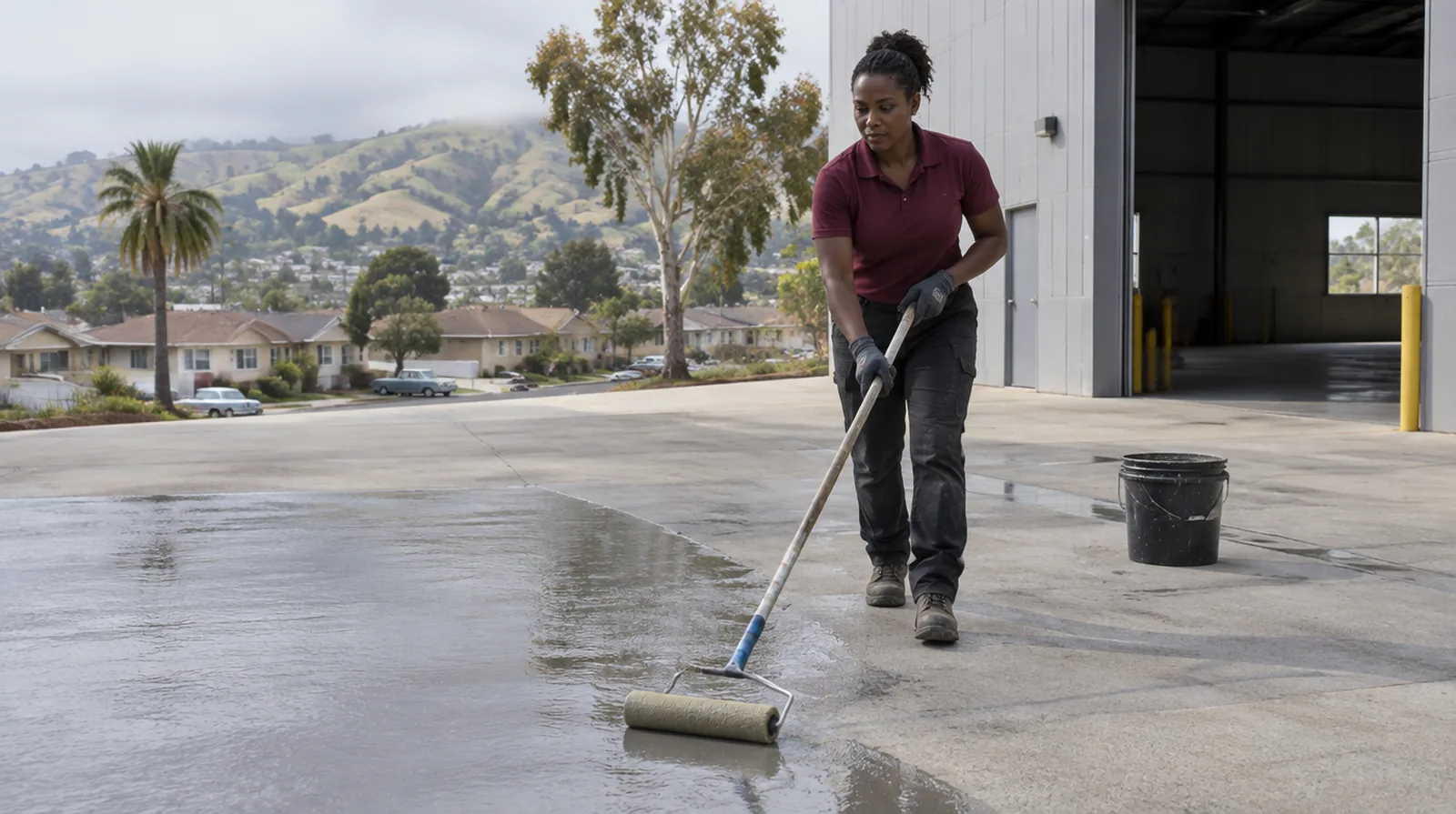
Outside a lot of Hayward buildings is a concrete apron that takes as much abuse as the floor inside: trucks turning, pallet jacks rolling in and out, rain from November to March and oily runoff from parked vehicles. Bare exterior concrete soaks up water and stains easily. A penetrating sealer slows that absorption and helps keep the surface from dusting and pitting over time.
For aprons and dock approaches we usually recommend a penetrating silane or siloxane sealer instead of a glossy film. It soaks into the concrete, does not make the surface slick, and stands up to tire traffic. We power wash, let the slab dry thoroughly, and apply the sealer in even coats with a sprayer or roller.
Residential driveways and walks
On homes, sealing is often paired with a garage coating so the driveway and front walk look as clean as the new floor. Older driveways in the flatlands may have tree root lifting near sycamores and street trees. We seal around those areas and point out any trip hazards you may want to address separately.
Timing with the weather
Sealer needs dry concrete and a stretch of dry days. In Hayward that usually means late spring through early fall. During the rainy months we watch forecasts carefully and reschedule if needed rather than seal a damp slab.
How often should outdoor concrete be resealed? It depends on traffic and exposure. We can show you a simple water test to tell when the sealer is wearing off.
Before sealing, we look for oil stains, rust marks from parked equipment and efflorescence, the white powder that shows where water moves through the slab. Stains are treated first so the sealer does not lock them in. We also check that downspouts are not dumping onto the slab, since standing water shortens a sealer's life no matter which product is used.
Seal your concrete
Call (510) 880-3198.